
A wholesale toothpaste trial order should answer a purchasing question: which combination deserves a repeat order in your channel? Choosing several attractive tubes is only a shortlist. Before requesting a quotation from our factory, give each proposed SKU a role, a quantity basis and a review date. This guide helps importers, distributors and private label buyers build that brief without assuming a universal best tube size or number of variants.
1. Define what the trial needs to teach you
Write one sentence describing the decision you will make afterward. For example: “We want to compare two flavors in the same retail channel before adding another size.” This is a planning example, not a recommendation that two SKUs will suit every buyer. Record the selling locations, intended customer group, observation period and available budget. Separate confirmed retailer requests from your team's assumptions.
Keep the initial question narrow enough to interpret. If flavor, tube size, packaging, price and sales channel all change together, a sales difference cannot tell you which factor mattered. You can still run that commercial trial, but describe the result as performance of a complete offer rather than proof that one flavor is preferred.
2. Give each candidate a distinct role
Start with your channel evidence: retailer inquiries, existing sales records or documented sample feedback. A candidate might address an established request, test an alternative flavor or investigate a different pack format. Put a candidate on hold when you cannot explain what decision it supports. There is no verified optimal SKU count for your market in this guide.
For general terminology, Shopify's assortment guide distinguishes product lines from variations within those lines. For your toothpaste brief, list each proposed combination separately so that changing a flavor, size or package does not disappear inside a single total quantity. This is a planning method, not evidence of demand for any particular toothpaste.
3. Build a copyable assortment worksheet
Use one row per candidate and attach the detailed product specification separately. “To confirm” is more useful than an invented value. The blank fields below are intended for your purchasing team to complete before sending an inquiry.
| Candidate | Role and evidence | Exact product and pack | Trial allocation | Decision after review |
|---|---|---|---|---|
| SKU A: ______ | Buyer request/reference: ______ | Formula reference, flavor, net content, tube/carton: ______ | Units, destination, period: ______ | Continue if: ______ |
| SKU B: ______ | Alternative being tested: ______ | Specification and difference from A: ______ | Units, destination, period: ______ | Compare on: ______ |
| Additional candidate: ______ | Reason it adds useful information: ______ | Specification still to confirm: ______ | Proposed units: ______ | Proceed / hold because: ______ |
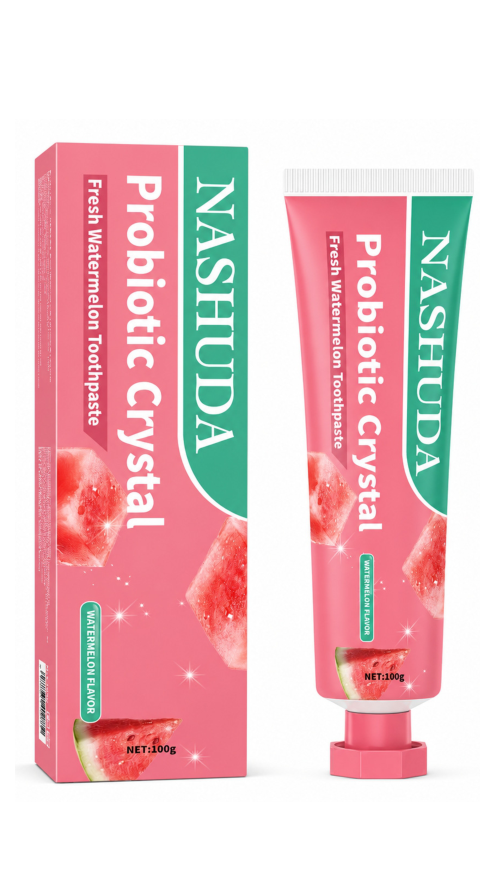
Add an owner and revision date to the worksheet. If your sales team changes the pack after purchasing requests a quote, update the row and seek a revised quotation. Browse our NASHUDA series catalog for identifiable references, then confirm the specific toothpaste item. A catalog listing alone does not confirm inventory, customization options or suitability for your destination.
4. Check the allocation against supply and shipment conditions
Ask for the minimum order quantity applicable to each proposed configuration, not only a total order minimum. Clarify whether printed packaging, a different formula or a separate size has its own conditions. Request units per carton, carton dimensions, gross weight, whether mixed cartons are available, and how a change affects the quotation. Do not assume a mixed order combines every minimum.
- Match each quoted line to the worksheet's product and packaging revision.
- Convert desired units into the confirmed packing multiple; review any rounding before approval.
- Check the total purchasing commitment and estimated landed costs with the responsible parties.
- Record sample approval, destination-specific document review and unresolved questions before order release.
Use our toothpaste RFQ checklist to organize the request and our quotation comparison guide to keep commercial scope consistent. We need your intended configuration to discuss a proposal; this article does not promise a particular MOQ, price or dispatch date.
5. Use a hypothetical allocation to test the arithmetic
Illustration only: suppose a buyer plans 600 units of candidate A and 400 units of B for the same observation period. These quantities are fictional planning inputs, not our MOQ or an available order offer. The allocation totals 1,000 units: 60% A and 40% B. The buyer must still verify packing multiples, budget and order feasibility.
Assume all units are received and available at the start, with no replenishment, returns, transfers, damage or free samples. If 240 units of A and 200 of B sell during that period, the share of starting units sold is 240/600 = 40% for A and 200/400 = 50% for B. A sells more units while B sells a larger proportion of its starting allocation. Neither result alone establishes which should receive the next order.
In a real trial, record stockouts, opening dates, promotions, price differences and distribution coverage. Reconcile returns and other stock movements separately. State the calculation and its time window explicitly; do not compare figures from reports that use different definitions.
6. Turn the review into a repeat-order brief
At the review date, mark each SKU continue, adjust or hold, with a reason linked to the trial question. Check customer feedback, remaining usable stock, costs and outstanding product issues alongside sales. A small trial is a decision aid, not proof of wider market demand. Send the next request with revised quantities and clearly identified specification changes.
Ready to discuss your shortlist? Visit our toothpaste factory sourcing page and send your assortment worksheet with the destination, channel, product references and proposed quantities. That gives our factory a concrete basis for discussing which details need confirmation before a quotation.
Confirming the packing arrangement? Use our mixed-SKU order checklist to map products to cartons and reconcile quantities.
Planning your next purchase? Use our toothpaste reorder planning guide to compare stock, sales and replenishment timing.