
To start a private label toothpaste project, first define the market, sales channel and product you want to sell under your brand. Then confirm the specification, quotation, sample, packaging and order conditions in a documented sequence. Owning the brand does not by itself settle formula rights, product requirements or production responsibilities.
This guide is our factory-side starting point for overseas importers, wholesalers, distributors and new brand teams. Use it to identify the next decision in your project and the information to bring to our team. Available options, minimum quantities, evidence and schedules require confirmation for the selected product; the steps below are a planning framework, not a standing offer.
1. Decide whether private label answers your purchasing goal
Begin with a practical question: must the first order carry your own brand, or are you evaluating distribution of an existing branded product? Those are different purchasing briefs. If your own identity is essential, describe which elements you need to control, such as the product name, artwork and packaging format.
If you are still comparing routes, use our stock toothpaste versus private label decision guide. A catalog listing does not confirm available inventory or permission to relabel an item. Likewise, the terms OEM and ODM should lead to questions about the work included, rather than assumptions about ownership or customization.
2. Prepare a focused first-product brief
State the country of sale, intended channel, target user and commercial purpose of the first order. Separate essential requirements from preferences. List each SKU by flavor, proposed pack size and packaging version, with a first-order quantity and a separately labeled forecast. Avoid presenting an optimistic forecast as a purchase commitment.
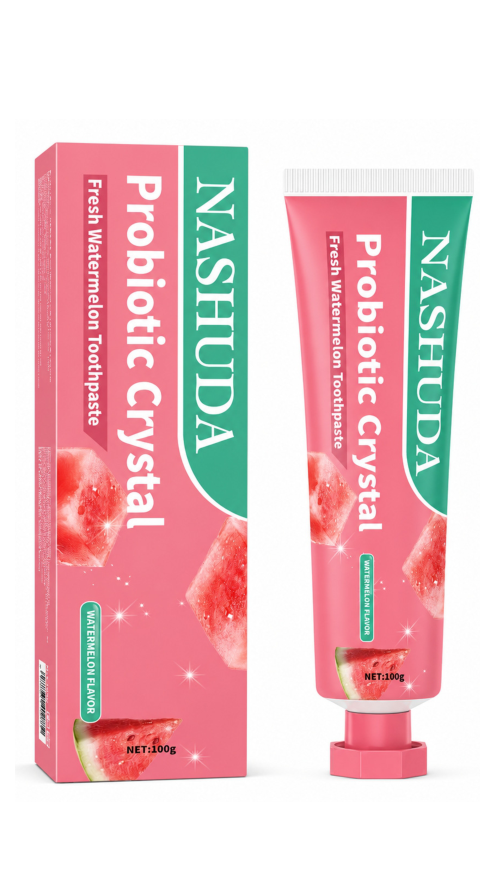
Use our NASHUDA toothpaste collection to identify a catalog reference where helpful. Ask for the current specification of the selected item instead of deriving ingredients, performance or customization scope from its name. A photograph helps identify the reference; it cannot replace the written product brief.
3. Use decision gates to organize the project
For each stage, record the responsible person, the current document revision and the unresolved questions. Proceed when the information needed for that decision is available. Several reviews can run together, but a later approval should not hide an unfinished earlier decision.
| Decision | Buyer preparation | Confirmation to retain |
|---|---|---|
| Purchasing route | Own brand or existing brand; market and channel | Written scope of the proposed supply arrangement |
| Product brief | Essential specifications and quantity by SKU | Agreed specification revision and explicit exceptions |
| Quotation | Comparable packaging and delivery requirements | Included charges, exclusions, validity and payment conditions |
| Sample review | Evaluation criteria and reviewers | Sample identifier, observations and approval limits |
| Artwork review | Reviewed copy, language versions and brand files | Approved files, component revisions and release scope |
| Order release | Closed questions and named approval owner | Order documents aligned with approved references |
| Shipment and reorder | Receiving checks and a feedback owner | Agreed records, discrepancies and future change requests |
4. Compare quotations after aligning the scope
Send the same revision of your brief when requesting alternatives. Our RFQ checklist and email template helps organize the request. Ask which formula, packaging or artwork choices affect the minimum quantity, and whether quoted amounts refer to one tube, a set or a carton.
Keep one-time charges and recurring charges separate. Confirm the currency, validity, payment stages and delivery boundary. Our quotation comparison worksheet shows how to reconcile different offers without treating a missing cost as zero. A lower price is only useful when you understand what changes with it.
5. Give samples a defined approval purpose
Ask what the sample represents: an existing product reference, a proposed formulation, a packaging mock-up or a closer representation of the intended order. Record what remains provisional. Reviewers should use the same criteria and distinguish observations from product claims that require supporting evidence.
Use our sample evaluation checklist to document the sample identifier, differences and open questions. If you approve flavor or pack handling, do not let that approval automatically stand for every specification or market requirement. Identify the documents and specialist review needed for decisions outside the sample's demonstrated scope.
6. Confirm packaging, evidence and responsibilities
Review the tube, carton and other relevant components against the same approved product information. Identify who supplies the text, reviews destination-market questions and signs off the artwork. Do not copy another product's claims or certification marks without confirming their applicability and supporting material.
Our packaging artwork approval checklist provides a component review table and written release record. Ask which proof or sample is suitable for the decision being made. Keep file names and revisions with the approval so the production discussion refers to an identifiable version.
Separately ask what rights and responsibilities the proposed arrangement includes. Topics to clarify may include artwork use, formula access, exclusivity, tooling and unused packaging. Private label alone does not answer these questions. Record the agreed position rather than relying on a broad description such as “full service.”
7. Build the schedule around confirmed dependencies
Distinguish a requested launch date from a confirmed production or shipping date. Ask what must happen before each stage begins, including any outstanding specification, sample, artwork, documentation or payment decisions. Record whether a date means completion, dispatch or arrival.
Before release, check that the quotation, specification, sample approval and packaging files refer to the same order. If something changes, ask what needs another review and whether there is an effect on charges or timing. After receipt, log discrepancies and feedback against the agreed references to prepare a clearer reorder discussion.
Your next step
If the route is undecided, begin with the route comparison. If the product brief is ready, prepare an RFQ. If you already have an offer or sample, use the corresponding checklist before moving to artwork or order release. These tools support one coherent project record instead of separate conversations that use different assumptions.
Discuss your private label project with our factory. Send your destination market, sales channel, product reference, quantity per SKU and current decision stage. Include the questions you need resolved next.
Send your project brief Explore our factory sourcing process